
The Little Prince's Return to His Planet
The Little PrinceTracks the Little Prince's disappearance and the narrator's belief that the prince has gone back to his planet.
increasing Bearing strength in each event
 decreasing
Bearing strength in each eventdecreasingPrince in the Desert

Prince in the Desert
Context
The Little Prince appeared in the African desert and spent time with the narrator. He was a small, golden-haired boy whose presence transformed an empty landscape into a world of meaning.
Development
The prince cared for his Rose and his Sheep even from afar, carrying the responsibility of his planet in his heart. His time on Earth was a temporary exile.
Significance
The desert meeting is the origin of the narrator's attachment. The prince's eventual return is framed against this brief terrestrial presence.
No Body at Dawn
No Body at Dawn
Context
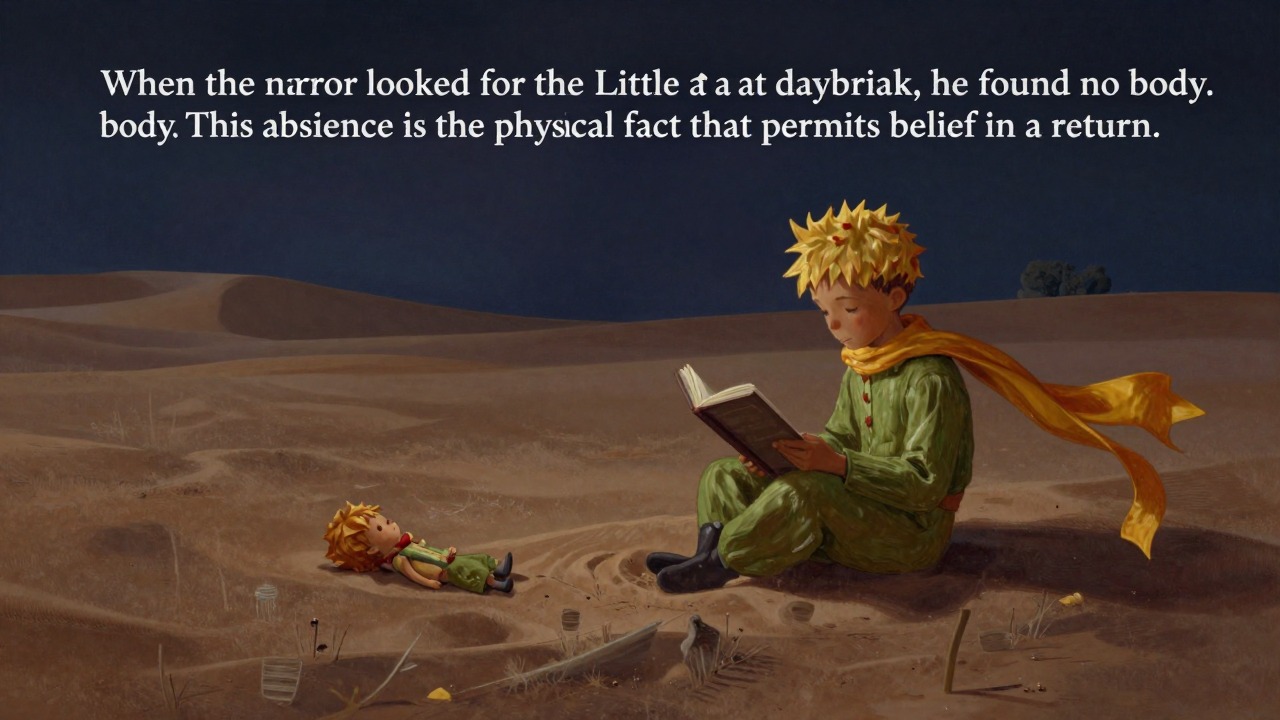
When the narrator looked for the Little Prince at daybreak, he found no body. This absence is the physical fact that permits belief in a return.
Development
A dead body would have ended the story; no body leaves it open. The narrator's reading of the empty sand is an interpretive act, perhaps a leap of faith.
Significance
No body at dawn allows the prince to become a traveler rather than a corpse. It is the hinge between death and homecoming.
Return Inferred
Return Inferred
Context
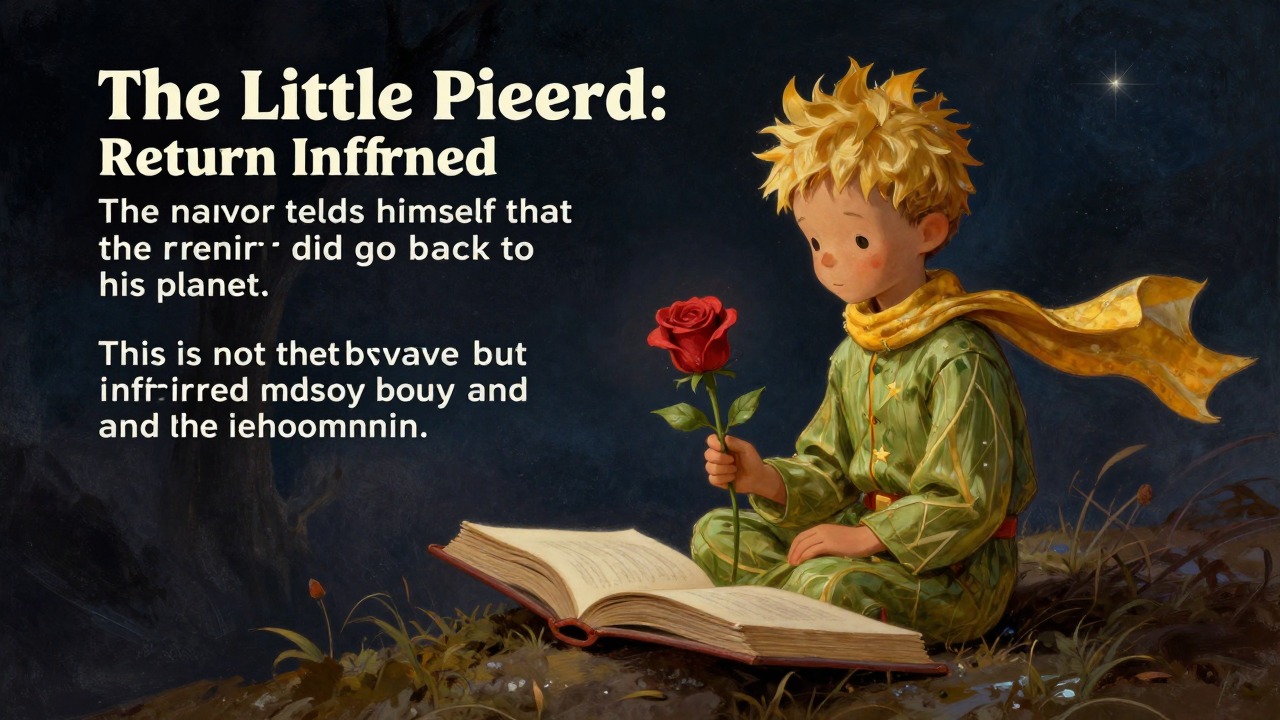
The narrator tells himself that the prince did go back to his planet. This is not observed but inferred from the missing body and from the prince's expressed love for his Rose.
Development
The inference is supported by the prince's character. A boy who spent every night covering his flower would want to return to guard her. The narrator's hope and the prince's devotion align.
Significance
Return inferred transforms the prince's fate into a message about love. He is not lost; he is where he belongs.
Planet Rejoined

Planet Rejoined
Context
Imagining the prince back on his planet, the narrator sees him tending the Flower, covering the globe, and watching the Sheep. The little planet is once again home.
Development
The return is not a static arrival but a resumption of care. The prince resumes his nightly duties, restoring order to his world. The narrator's comfort depends on this image.
Significance
Planet rejoined gives the prince an afterlife in the narrator's thoughts. It creates a parallel scene to Earth, where the Prince lives on.
Presence in the Stars
Presence in the Stars
Context
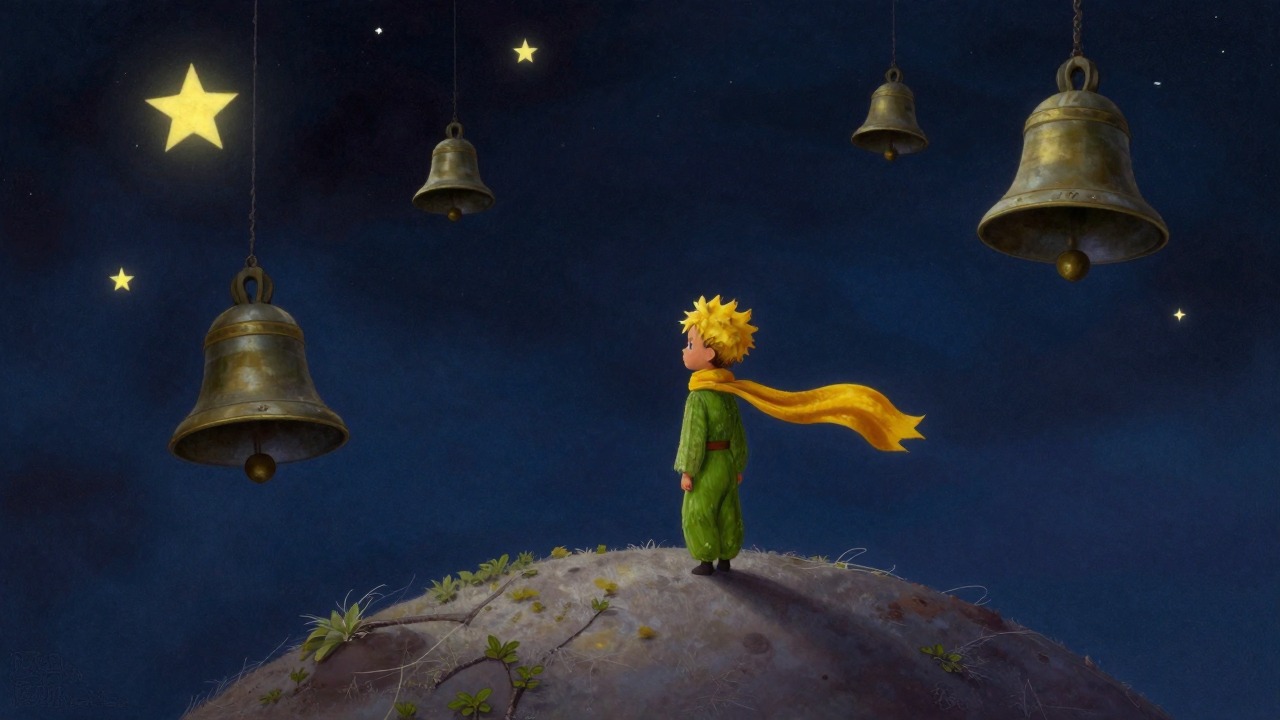
The stars have become bells because the narrator feels the prince's presence above. The return to the planet is not a distant fact; it is audible in the night sky.
Development
The prince is not visible, but his reality is encoded in sound. The bells are a form of communication, as if the prince's laughter has been scattered across the Milky Way.
Significance
Presence in the stars ensures the prince's return is permanently available to the narrator. The planet is unreachable, yet its inhabitant is everywhere.
during his time on Earth with the narrator
at daybreak after the prince's disappearance
when the narrator concluded the prince had gone back to his planet
in the narrator's imagination after the departure
six years later, when the narrator hears bells in the stars
